
Tatnall EV Aftersales Insight
EVs Are Changing Aftersales Forever
But the biggest opportunity still sits inside the eVHC process.
By Jon Tatnall | Automotive Retail Consultancy & Operational Support
The UK automotive industry is moving rapidly towards electric vehicles.
And while the headlines often focus on:
- battery technology
- charging infrastructure
- government targets
- EV sales growth
…the real operational challenge for dealerships sits inside aftersales.
Because EVs are changing the entire workshop revenue model.
Inside This Insight
Why the traditional aftersales model is changing
EVs are reducing routine maintenance demand and increasing the importance of every customer touchpoint.
Where EV revenue is shifting
Tyres, suspension, diagnostics, battery health, software, ADAS and thermal management are becoming more important.
Why eVHC conversion matters more than ever
Fewer workshop visits mean dealerships cannot afford weak communication, poor follow-up or lost identified work.
The Traditional Aftersales Model Is Changing
Historically, workshops relied heavily on recurring maintenance revenue from:
- oil changes
- filters
- exhaust systems
- timing belts
- engine servicing
- traditional wear-and-tear components
But EVs remove huge amounts of that work completely.
£175
less annual workshop revenue per EV compared to ICE
£210m
estimated UK reduction in traditional servicing revenue
And there is another major factor. Most EVs are now moving towards:
- bi-annual servicing
- extended service intervals
- lower routine maintenance schedules
Fewer workshop visits = fewer natural sales opportunities. That changes everything.
The Revenue Hasn’t Disappeared — It Has Shifted
The important point is this:
EV aftersales revenue is not disappearing completely. It is evolving.
The revenue is now moving towards:
Because EVs may have fewer moving engine parts, but they are:
- significantly heavier
- far more software driven
- technically more complex
- and still create wear in key areas
For example:
- EV battery weight places more strain on tyres and suspension
- regenerative braking can create brake corrosion and seizure issues
- thermal management systems create high-value repair opportunities
- ADAS and electronic systems require specialist calibration and diagnostics
The work is still there. It just looks different.
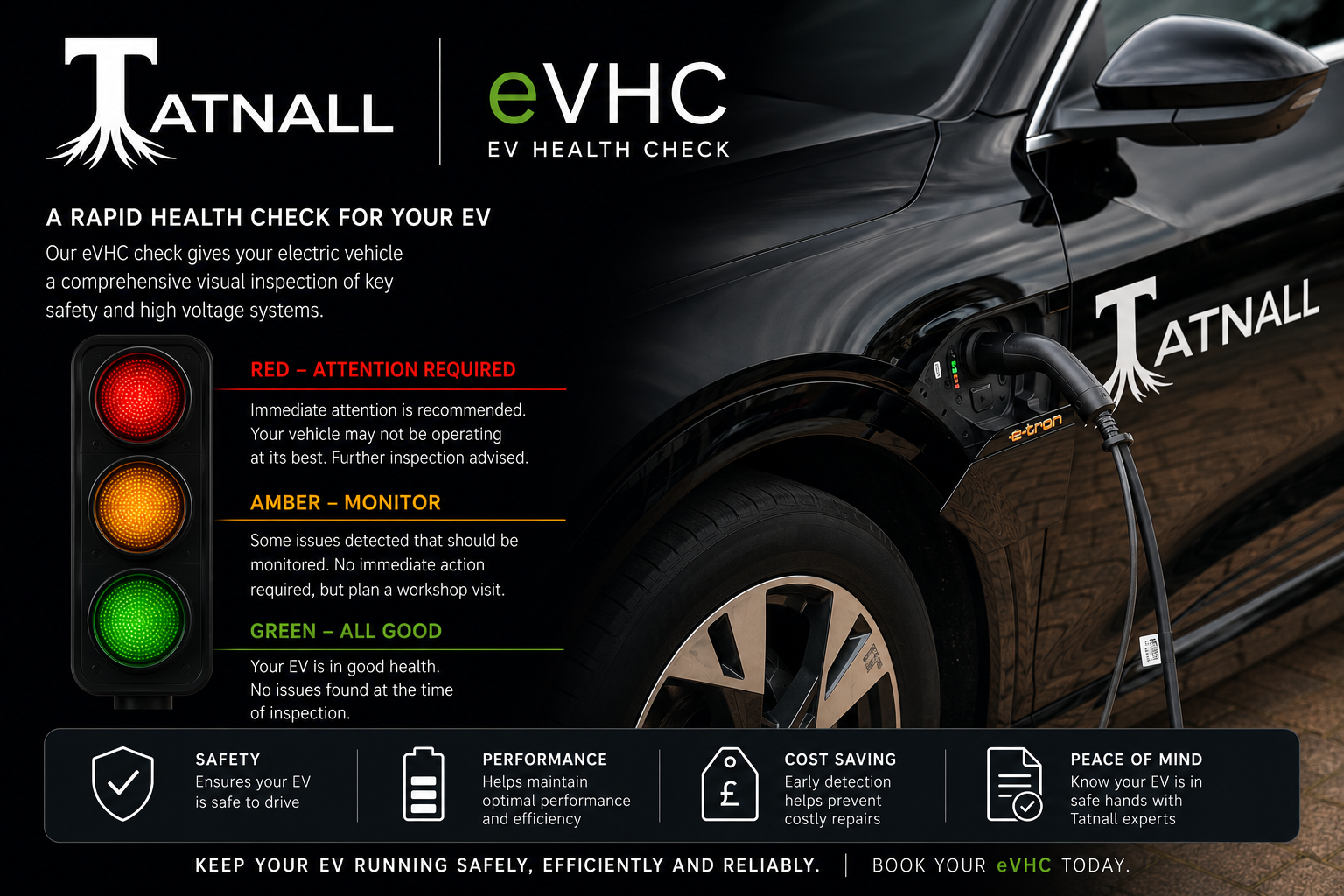
This Is Why the eVHC Process Becomes Critical
With fewer service visits per year, every workshop interaction matters more than ever.
And that is where the eVHC process becomes absolutely vital.
Modern eVHC systems already allow technicians to:
- identify faults
- upload photos
- create videos
- highlight Red and Amber work
- present visual evidence to customers
The problem is not usually the technician. The technician often identifies the work correctly.
The issue is what happens next.
Technicians Find the Work — But It Still Needs Selling
This is one of the biggest operational gaps I see developing within EV aftersales.
The technician:
- identifies the tyre wear
- spots the suspension issue
- notices the brake corrosion
- sees the cooling system concern
…but unless the customer properly understands:
- the importance
- the safety risk
- the future cost
- the technical reasoning
…the work often gets declined. This is where service advisors become incredibly important.
Service Advisors Now Need EV Knowledge — Not Just Booking Skills
In my opinion, service advisors can no longer simply:
- book vehicles in
- present prices
- and process invoices
They now need genuine EV understanding.
Not technician-level diagnostic training, but enough knowledge to confidently explain:
- why EV tyres wear differently
- how regenerative braking affects brake systems
- why thermal management matters
- why suspension wear increases on heavier EVs
- why battery cooling systems are critical
Customers often believe: “EVs don’t need servicing.” But that simply is not true. They need different servicing.
Technicians May Actually Be the Most Trusted Salespeople in the Building
This is where I think the industry has a huge opportunity.
Personally, if a trained technician explained to me:
- what the issue was
- showed me visual evidence
- explained the risk clearly
- and talked me through why it mattered
…I would probably be far more likely to authorise the work.
Why?
Because technicians carry trust and credibility.
Customers see technicians as:
- experts
- engineers
- problem solvers
- professionals fixing the vehicle
Not salespeople.
This is exactly why technician videos, eVHC photos, visual explanations and direct technician communication can massively improve conversion rates.
The conversation becomes educational rather than transactional. And that changes customer behaviour completely.
The Real Revenue Risk for EV Workshops
As EV servicing intervals increase, workshops simply cannot afford weak eVHC conversion.
Because there are:
- fewer customer touchpoints
- fewer routine maintenance opportunities
- fewer chances to recover lost revenue later
If the dealership misses the opportunity today, the customer may not naturally return for another 2 years.
That makes advisor training, eVHC process, customer communication, follow-up discipline, pricing speed and technician engagement more important than ever before.
EV Aftersales Is Becoming a Diagnostic & Communication Business
The industry is shifting away from:
“replace simple mechanical parts”
towards:
“diagnose, explain and justify technical work.”
That means aftersales success will increasingly depend on:
- technician quality
- advisor knowledge
- process execution
- customer trust
- communication skills
Not simply workshop loading alone.
Why Training Now Matters More Than Ever
Many service advisors were trained in a traditional ICE environment.
But EVs require a different conversation.
That means dealerships now need:
- EV awareness training
- eVHC presentation coaching
- customer communication development
- consultative aftersales skills
- confidence in explaining technical findings
Without that, the workshop may identify the opportunity, but still fail to sell it.
The Opportunity Is Already Sitting on the Ramp
At Tatnall Automotive Consultancy, we believe one of the biggest revenue opportunities in modern aftersales sits inside eVHC conversion, advisor development, technician communication, process consistency and EV customer education.
That is exactly why we created the eVHC Revenue Opportunity Calculator.
The calculator helps dealerships estimate lost revenue opportunity, Red and Amber conversion gaps, workshop revenue leakage and additional revenue potential from improved eVHC performance.
View the eVHC Calculator Book A ConversationBecause as EVs become more common, workshops will not survive purely on traditional servicing models anymore.
The dealerships that win will be the ones that:
- educate customers better
- communicate technical findings clearly
- train advisors properly
- and convert more of the work already being identified every single day
Sources & Industry References
Data compiled using UK automotive industry research, workshop performance analysis and EV aftersales benchmarking including:
- Institute of the Motor Industry (IMI)
- Automotive Management Online
- NFDA — National Franchised Dealers Association
- CAP HPI Automotive Intelligence
- CitNOW
- Keyloop
Figures referenced are based on UK automotive industry averages, EV aftersales research and workshop performance benchmarks and may vary by franchise, labour rate, workshop size and operational maturity. Data compiled May 2026.
#Tatnall #AutomotiveRetail #EVs #Aftersales #eVHC #WorkshopPerformance #ServiceAdvisor #Technicians #CustomerExperience #AutomotiveConsultancy